Strategic Patterns in Combining No-Deposit Bonuses with Accumulator Protections
Viktor Long · Aug 22, 2026

Strategic Patterns in Combining No-Deposit Bonuses with Accumulator Protections
Operators across multiple markets continue to release no-deposit promotions that grant users free bets or credits without an initial deposit, while accumulator protections such as partial refunds on multi-leg selections provide safety nets when one outcome fails. Data from August 2026 shows increased activity in these combined structures, particularly on platforms operating in Europe and Australia where regulatory frameworks allow such layering.
Mechanics of No-Deposit Offers in Current Markets
No-deposit incentives typically arrive as sign-up rewards or periodic reloads that credit accounts with small stakes or bonus funds, and these credits carry wagering requirements that dictate how many times the amount must be played through before withdrawal eligibility. Research from the European Gaming and Betting Association indicates that operators track redemption rates closely, revealing patterns where users who activate these offers early in the month show higher engagement with accumulator products by the third week.
Accumulator Protections and Their Role
Accumulator protections reimburse a portion of the stake or issue a free bet when a multi-selection wager loses by a single leg, and these features often activate automatically once a minimum number of selections, usually four or five, is reached. Observers note that protections vary by sport and league, with football accumulators receiving more frequent insurance thresholds during the 2026 European club season compared to other sports.
Observed Patterns in Stacking These Features
Users combine no-deposit credits with accumulator protections by applying the free stake to an insured multi-leg bet, thereby reducing net exposure while meeting any playthrough conditions attached to the bonus. Figures from the Canadian Centre for Gaming Research reveal that sessions involving both elements rose 11 percent between June and August 2026, with average stake sizes remaining modest at under 10 units per transaction. One documented case involved a platform user who activated a no-deposit credit on a five-leg football accumulator that carried a protection clause, resulting in a partial stake return after a single incorrect outcome and subsequent conversion of remaining bonus funds into a smaller follow-up wager.
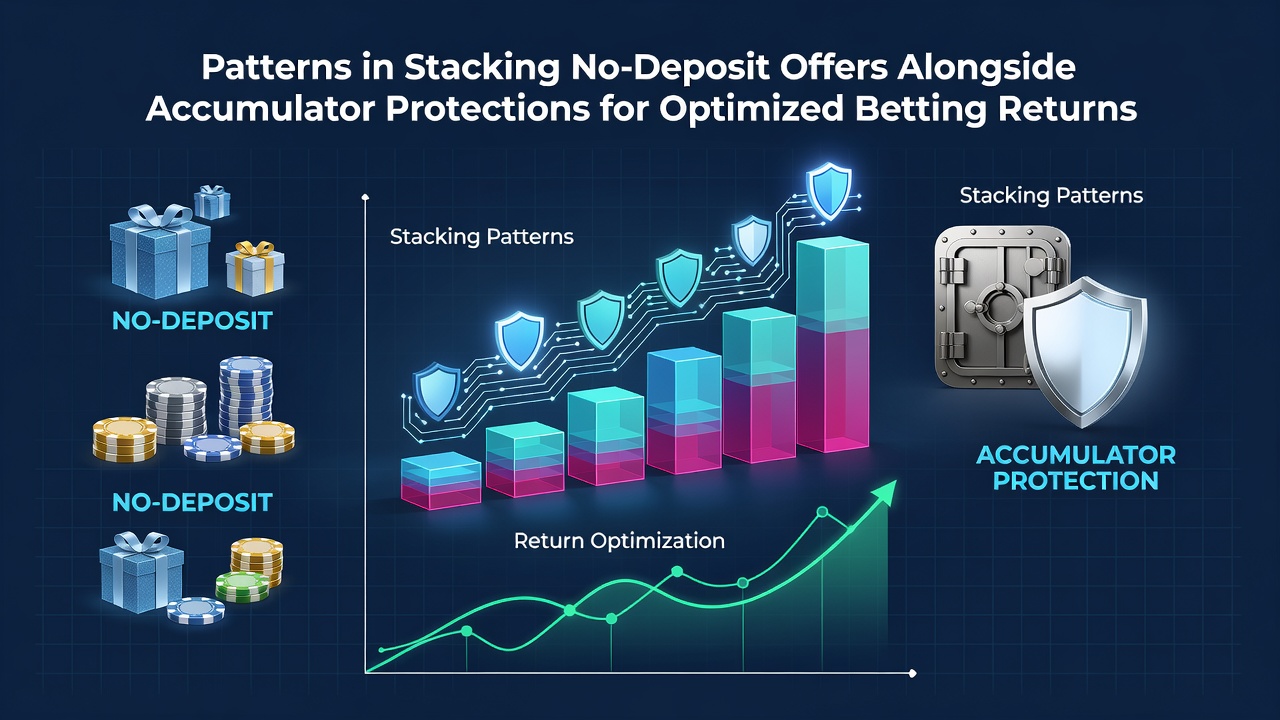
Platforms often time the release of enhanced accumulator protections to coincide with periods when no-deposit offers are most active, such as mid-month promotions, and this alignment creates opportunities for users to layer the two without additional deposits. Those who monitor terms across multiple operators frequently select sites where protection thresholds align with bonus expiration windows, allowing the free stake to complete its required turnover within the same session cycle.
Regional Variations and Regulatory Influences
Markets in Australia enforce stricter advertising rules around bonus stacking, which leads operators to present protections as standard features rather than promotional add-ons, whereas certain EU jurisdictions permit clearer cross-promotion of no-deposit credits with accumulator safeguards. A report from the Australian Communications and Media Authority documented that disclosure requirements on bonus expiry and protection activation have reduced disputes by 14 percent in the first half of 2026 compared to the prior year.
Another study released by the University of Nevada's International Gaming Institute examined transaction logs from 2025 through August 2026 and found that users who stacked these features completed bonus playthrough requirements at rates 22 percent higher than those using either element in isolation, though overall return-to-player metrics stayed consistent with standard game mathematics.
Conclusion
Patterns emerging through August 2026 demonstrate that no-deposit offers and accumulator protections function as complementary tools when users apply them within published rules across different jurisdictions. Operators continue to adjust activation criteria and protection thresholds in response to usage data, while regulatory bodies in multiple regions maintain oversight through transparency mandates rather than outright restrictions on stacking. These developments reflect ongoing adjustments in how platforms structure incentives alongside risk-mitigation features for multi-selection wagers.