Accumulator Insurance Mechanisms and Their Integration with Bonus Stacking Techniques
Theo Krüger · Nov 13, 2026

Accumulator Insurance Mechanisms and Their Integration with Bonus Stacking Techniques
Accumulator insurance provides a structured safeguard within multi-leg betting products where operators refund stakes or issue partial returns if one selection in an accumulator fails to win, and this mechanism has grown alongside various promotional layers that allow punters to combine multiple incentives on the same wager.
Core Components of Accumulator Insurance
Operators define accumulator insurance through specific eligibility rules that activate when a bet reaches a minimum number of legs, typically four or more, while payout structures vary from full stake refunds on the losing leg to percentage-based returns scaled by the total stake size. Data from regional gaming authorities indicates these products often carry fixed maximum refund caps, and operators update terms periodically to align with market conditions observed in late 2026.
Eligibility criteria usually require all legs to meet minimum odds thresholds, and insurance applies only to pre-match selections rather than in-play adjustments. Those who examine operator data note that activation rates increase during high-volume periods such as major football tournaments, where accumulators see elevated participation.
Bonus Stacking Techniques Explained
Bonus stacking occurs when punters apply multiple distinct promotions, including free bet credits, odds boosts, and cashback offers, to a single accumulator without violating platform terms that restrict overlapping incentives. Research from the Responsible Gambling Council of Canada shows that stacking sequences follow strict ordering protocols, with free bet funds often applied first followed by boost multipliers on remaining selections.
Platform algorithms track bonus usage through unique identifiers attached to each promotion, and stacking succeeds when operators permit sequential application across different bonus categories. Figures from industry reports reveal that successful stacks frequently involve combining a deposit-matched free bet with an accumulator-specific insurance rider, producing layered risk mitigation on the overall position.
Integration Patterns Observed in Practice
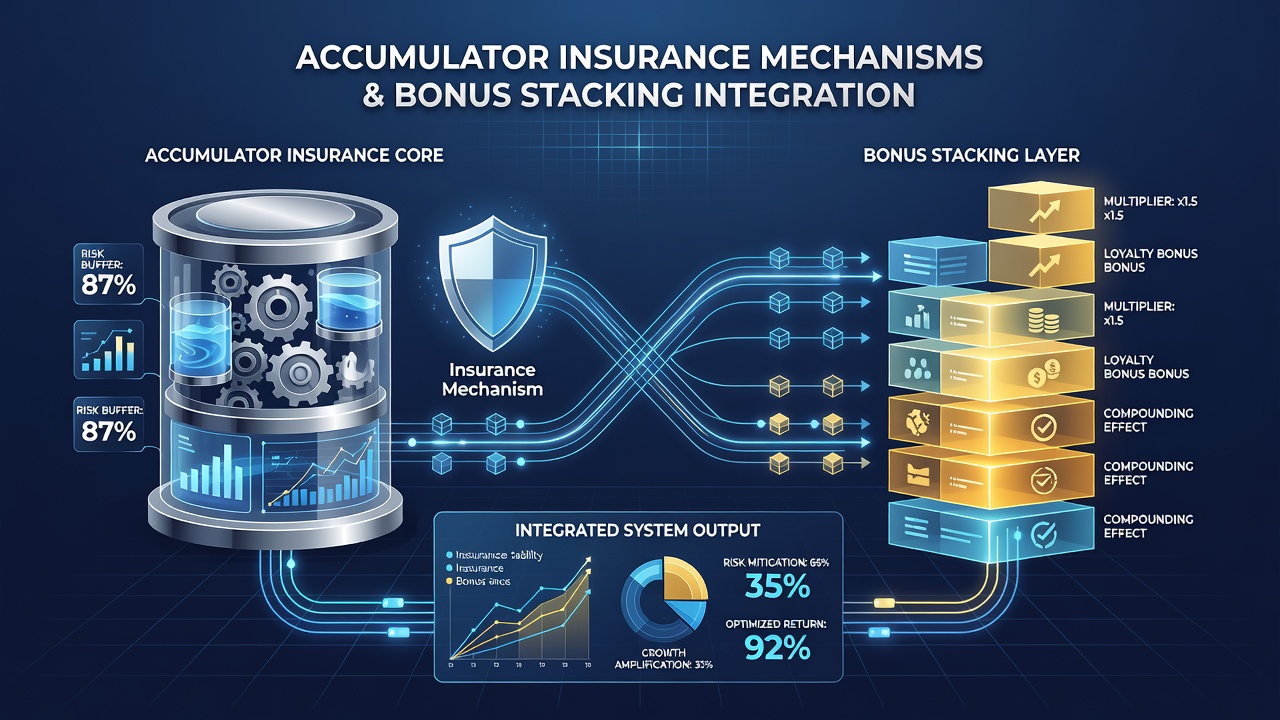
Integration begins when operators allow insurance refunds to qualify for subsequent bonus calculations, meaning a refunded stake portion can trigger additional free bet issuance under the stacked promotion rules. Observers note that this creates compounded effects where an insurance payout on one leg preserves eligibility for boost multipliers on the remaining selections, and such patterns appeared more frequently in November 2026 data releases covering remote betting volumes.
Technical systems enforce integration limits by tagging each bonus type with usage flags that prevent infinite layering, while permitting defined combinations such as insurance plus one odds boost per accumulator. Case examples from operator analytics indicate that punters who align insurance activation windows with bonus expiry dates achieve higher retention of stacked value across multiple betting cycles.
Regulatory and Operational Considerations
Regional regulators outside the United Kingdom track these integrated products through mandatory reporting on bonus transparency and insurance claim volumes, and authorities in jurisdictions such as Australia require clear disclosure of how insurance refunds interact with stacked promotions. The Victorian Commission for Gambling and Liquor Regulation has documented instances where operators revised integration rules after identifying patterns of repeated stacking that exceeded intended promotional scopes.
Operational teams at betting platforms monitor integration through automated reconciliation tools that flag accounts attempting unauthorized bonus combinations, and these systems update in real time to reflect changes in terms that affect accumulator insurance eligibility. Data indicates that compliant integration maintains player engagement levels without triggering additional compliance reviews during standard audit cycles.
Conclusion
Accumulator insurance mechanisms continue to evolve alongside bonus stacking techniques as operators refine eligibility rules, payout structures, and integration protocols to match observed market activity through November 2026 and beyond. Regional data sources demonstrate consistent application of these combined features across multiple jurisdictions, with technical safeguards ensuring defined boundaries on stacking sequences while preserving the core refund functions of insurance products.